
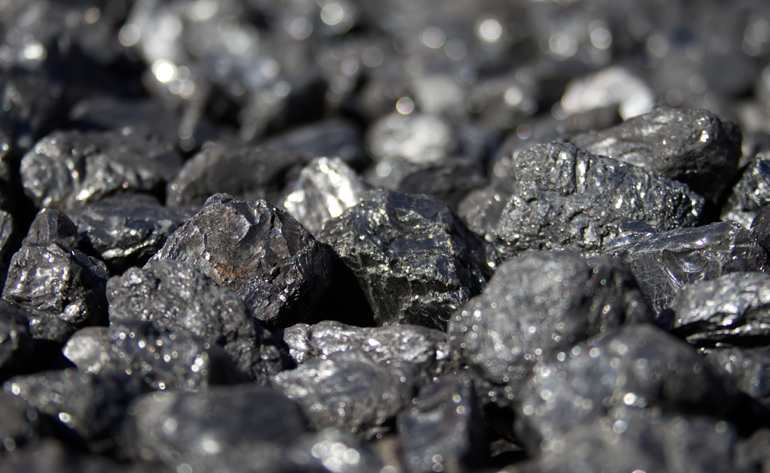
Petcoke
Petcoke is a by-product of oil refining. When refineries around the world try to work more efficiently to extract more gasoline and other high-value fuels from every barrel of oil, a solid carbon substance called petcoke is formed. Petcoke has a higher carbon content than coal, which is more than 90% carbon. Calcined Petroleum Coke is more than coal with an average of 7700 kcal/kg according to the heating value of the product. Calcined Petroleum Coke is cheaper than coal as it is a by-product of refinery. Since no alternative product can replace Calcined Petroleum Coke, there is a significant increase in demand. High efficiency and low price are important advantages by end users who prefer to use Calcined Petroleum Coke instead of coal.
The chemical and physical properties of petcoke depend on the nature of the crude oil used and the refining techniques used in refineries. Physically, petcoke can be extremely hard or soft. It can look like giant sponges with many pores and small spheres ranging from a grain of sand to a large marble. Chemically, petcoke may contain various metals and elements in different concentrations. Based on these chemical and physical properties, pet fragrance is often used either in a power generation process to produce British Thermal Units (BTUs) or in industrial use for carbon sources. In addition, Petcoke is a fuel used in power generation facilities. Power plants and cement plants are currently two major users of petcoke. It is used in Europe for a small but emerging market for a metallurgical coal mixing component in industries such as space heating, commercial brick kilns and steel.
In terms of fuel, petcoke has high calorific properties for a reasonable price, making it an appealing energy source to replace thermal coal.
Fuel grade petcoke accounts for about 80 percent of all petcoke production. Zeenith is the leading global company in the sale and supply of fuel quality petcoke, with a petcoke capacity of more than 11 million tons per year. Zeenith supplies petcoke from all major refining companies around the world, including ExxonMobil, Valero, Chevron, British Petroleum, PBF Energy, Phillips 66, Tesoro, Essar, Reliance and Shell.
Petcoke’s fuel grade is generally extremely high in terms of heat value (BTU per pound). It produces almost no ash at its combustion point and is often used in power plants or cement kilns. Key factors driving the expansion of the petcoke market include increasing demands for petroleum coal for use in the steel industry, for use as an additive in electrodes or as a carbonized environmentally sustainable venture, growth in the energy and cement manufacturing industries, and the growth of the global supply of heavy oil. In addition, the use of petcoke in steel production is expected to accelerate the growth of the market. Experts believe that the size of the Petroleum Coke Market will exceed $10 billion in the next few years.

Our benefits
The most reliable source for objective analysis of the oil and coke business.
- Used In Rainy Season
- Low Ash Content
- High Calorific Value
Petroleum Coke, also known as “petcoke,” is a solid carbon material produced as a byproduct of oil refining. Petcoke is usually utilized as a fuel source for power plants.
Avoid spending time outdoors or outdoors, particularly under conditions where dust is likely to exist (i.e. dry, windy and cold conditions). Keep windows shut. Clean the floors and other surfaces around your home to remove dust.
Petcoke is a byproduct created when bitumen is found in the tar sands of Alberta, Canada. Located in Alberta, Canada is transformed into crude oil. Bitumen is a richer source of carbon-atom atoms than normal oil, and it’s these atoms derived from huge hydrocarbon molecules with heat which eventually make petcoke.
High-quality petcoke that is low in sulphur and heavy metals can be utilized to create electrodes for the aluminum and steel industry. However, the majority of petcoke produced globally, around 75-80%, is lower grade, contains higher levels of sulphur and heavy metals, and is used only as fuel. Most of the petcoke made by the U.S. is exported to China, the world’s biggest user of coal for fueling its coal-fired power plants.